Vetting Your Next Board of Directors
Vetting Your Next Board of Directors
Building the Table: How to Vet Your Next Board Member
In the high-stakes world of technology leadership due diligence is a two-way street. While a company’s board and VC partners are busy poking holes in your track record, you must be equally rigorous in auditing their foundational abilities. For a C-suite or VP-level candidate, the risk isn’t just an errant fit, it’s the professional and financial cost of joining an organization that may already be headed in the wrong direction. Before you sign an offer, it’s imperative to look past the product vision and delve into the innerworkings of the organization – particularly burn rate, runway, and technical debt.
From a corporate perspective, passion isn’t enough and a less than ideal hire can lead to years of strategic drift or cultural friction. As we navigate the complexities of 2026 from rapid AI integration to shifting regulatory landscapes, the vetting process must be more than a cursory check from both sides. It requires a disciplined, competency-based approach. Here is how to vet your next board of directors to ensure they bring value, not just a name.
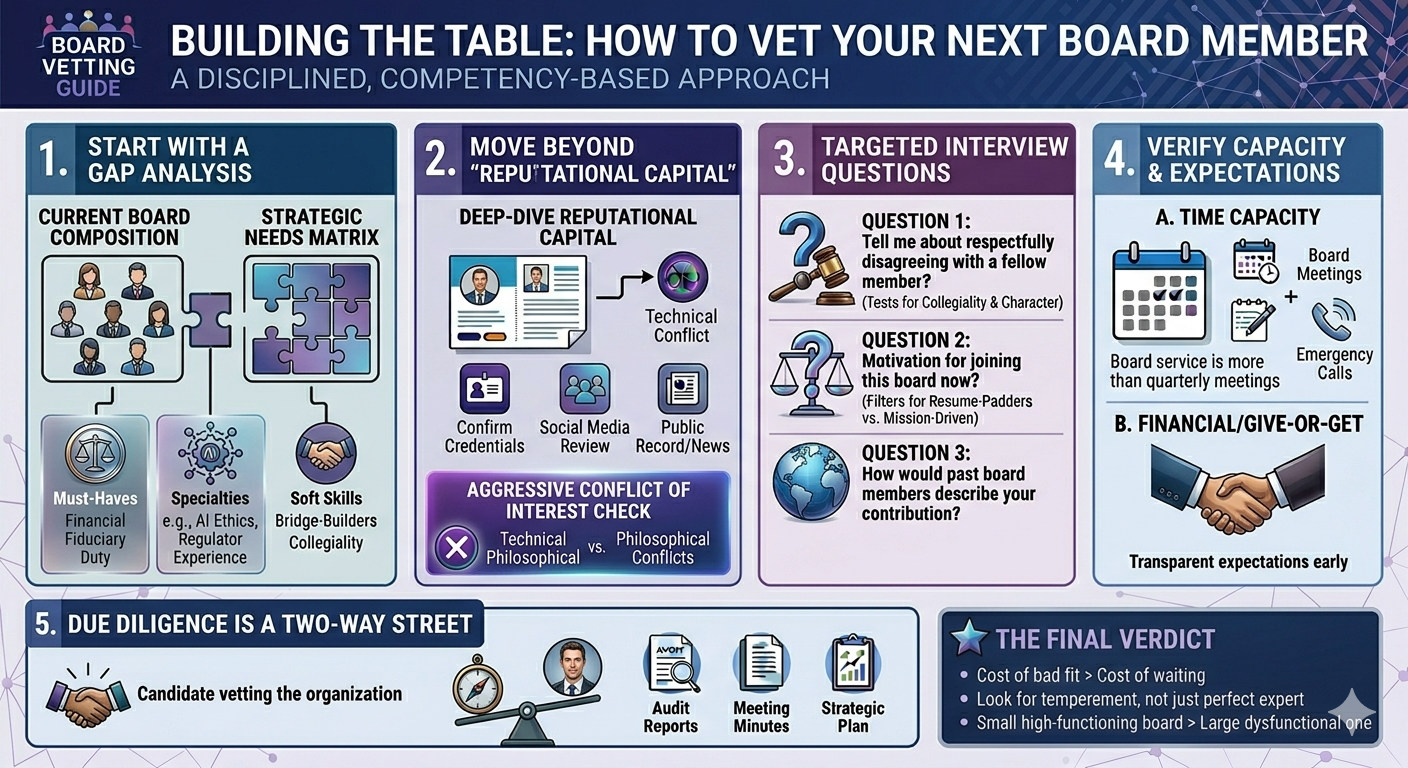
• Start with a Gap Analysis
Before looking at names, examine the construct of your current board. Use a Strategic Composition Matrix to map out what you already have and what you’re missing.
Must haves will include financial literacy and a commitment to fiduciary duties.
Examine and refine the specific specialties that will be required. Do you need a voice with deep AI ethics experience? Someone who has navigated a major pivot? Perhaps a member with direct, tangential experience related to your mission?
Don’t overlook soft skills. You need bridgebuilders, not just experts.
• Move beyond the paper credentials
A CV tells you what they’ve accomplished but it doesn’t tell you how they’ll govern. Your vetting process should include deep dive inquiries into their reputational capital.
Confirm basic credentials, but also review social media and public news mentions. A candidate’s online footprint is a direct reflection of your organization’s brand.
Examine potential conflicts of interest to aggregate and separate potential technical conflicts which may be manageable and philosophical issues (e.g., serving on a competitor’s board or holding conflicting business interests) which will be dealbreakers.
• Pertinent interview questions
Interviews shouldn’t just be about their expertise, they should also examine their behavior. Try these targeted questions:
“Can you tell me about a time you had to respectfully disagree with a fellow board member?” (Tests for collegiality and character).
“What is your motivation for joining this specific board right now?” (Filters for resume-padders vs. mission-driven leaders).
“What other board experiences have you had and how would those members describe your contribution?” (Look for signs of negative influence or disengagement).
• Verify time and financial capacity
It’s can be an awkward conversation, but a necessary one. Board service isn’t just a quarterly meeting. It’s committee work, emergency calls, and strategic retreats. Ensure their employer and other commitments allow for this. For nonprofits especially, be transparent about financial expectations early in the process.
• Due Diligence is a Two-Way Street
The best candidates will vet you just as diligently. If a prospect asks to see your recent audits, meeting minutes, or strategic plan, consider it a green flag. It shows they understand the weight of their potential liability and the importance of their role.
The cost of a poor fit always exceeds the cost of waiting. If a candidate is seemingly almost perfect but lacks the temperament for collaborative governance, keep searching. A smaller, high-functioning board will always outperform a large, prestigious group that can’t reach a consensus.