
The Changing Scope of the CISO in 2026
The Changing Scope of the CISO in 2026
A role in the middle of a rapid and significant transformation
We are seeing a number of forces reshaping executive leadership in 2026, but few are as quietly dramatic as the redefinition of the Chief Information Security Officer. For the better part of three decades, the CISO operated as a kind of organizational sentinel who was a technically formidable and highly specialized executive whose core mandate was to build walls and enforce controls. That model worked relatively well until recent years.
The current threat landscape has grown much more complex, while the regulatory environment and the pace of AI-driven business transformation have expanded far too fast for the prior mentality to remain viable. Organizations that continue to treat the CISO as a purely defensive function are discovering that security, left out of strategic conversations, tends to become a bottleneck. The most effective security leaders in 2026 understand that their value to the enterprise is measured not just in incidents prevented, but also in deals enabled, partnerships secured, and competitive advantages created through the intelligent management of risk.
There are a number of important factors for organizations and their boards to consider when determining how to structure the CISO function and what to expect from the individual in that position going forward.
The numbers
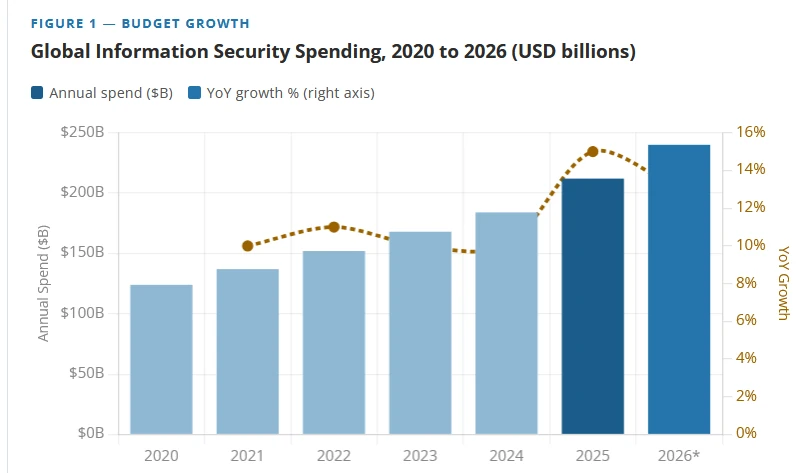
The data surrounding the current state of cybersecurity leadership and its relationship to business outcomes is telling.
• Global information security spending is projected to reach $220 billion in 2026.
• The typical data breach is not costing over $10M.
• About 90% of CISOs say that their role has undergone a fundamental shift.
• 70% of company boards anticipate including a cyber expert member by the end of the year.
What led to this moment
It is worth understanding why the traditional CISO model developed in the first place. Early information security leaders operated in organizations where technology was a support function rather than a component of revenue. The internet was a controlled channel, and in that environment, an isolationist posture made reasonable sense. Perimeter, access control, and compliance were the primary focus and, when done well, this protected the organization from the threats of that era. Several converging developments have since made that approach not merely insufficient but actively counterproductive.
Cloud and distributed infrastructure
The perimeter that the traditional CISO protected essentially no longer exists in its original form. Data and applications are distributed across multiple cloud environments, partner ecosystems, and remote workforces. There is no wall left to guard in the way there once was.
AI as both threat and tool
Attackers now leverage artificial intelligence to automate phishing campaigns, generate deepfakes, and exploit vulnerabilities at a scale and speed that manual defenses can’t match.
Regulatory intensity
Compliance is no longer a periodic audit exercise. It is a continuous operational reality with direct financial and reputational consequences.
Board-level accountability
The SEC’s cybersecurity disclosure rules, which require public companies to report material incidents within four business days and to describe their cybersecurity risk management processes in annual filings, have placed the CISO’s work squarely in front of investors, boards, and regulators simultaneously.
The skills gap
One of the most significant difficulties a CISO navigating this transformation must contend with is the state of the talent pool. The global cybersecurity workforce gap stands at approximately 5 million unfilled roles, a 20% increase from the prior year. Most importantly, the skills people have don’t match with the threats they are being asked to address.
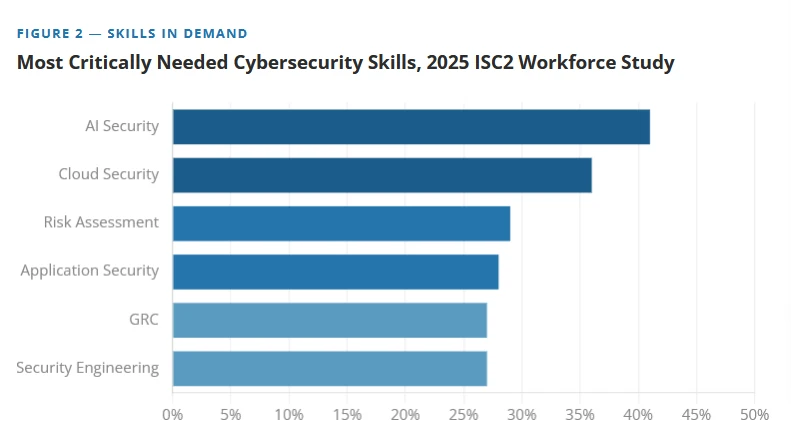
The implications for a CISO attempting to operate as a strategic business partner are significant. You cannot credibly advise the CEO on the risk profile of a proposed acquisition or a new AI deployment if your team lacks the ability to assess either one. Building the right group of professionals, retaining it in the face of budget pressures, and developing the capabilities that the next generation of threats demands is itself a strategic challenge, not a hiring manager’s problem to solve in isolation.
We’ve found that forward thinking CISOs are addressing this in several ways including adopting managed security services to cover capability gaps, building structured partnerships with AI vendors who can augment human analysis, and using skills frameworks to match role requirements to actual competency needs rather than inflated job descriptions that leave qualified candidates on the sidelines. We can definitely help formulate these tools.
The old model versus the new approach
It’s useful to further describe the contrast because the gap between where many CISOs still operate and where the role needs to go is considerable.
|
Dimension |
Traditional CISO |
Modern CISO |
Business Impact |
|---|---|---|---|
|
Primary mandate |
Prevent breaches and enforce compliance |
Enable secure growth and manage risk as a business variable |
Revenue aligned |
|
Relationship to new initiatives |
Review and approve at the end of the process |
Contributor at the start of strategic planning and product development |
Faster time to market |
|
Board and CEO communication |
Technical briefings during incidents or audit cycles |
Regular strategic risk conversations tied to business objectives and KPIs |
Better investment decisions |
|
Security budget framing |
Cost of protection, justified by threat scenarios |
Business investment with quantifiable ROI. Justified by risk reduction per dollar |
Improved budget outcomes |
|
AI governance stance |
Block or heavily restrict AI adoption until controls exist |
Co-develop AI governance frameworks that allow safe adoption at speed |
Competitive advantage |
|
Reporting line |
CIO or CTO, technology/function alignment |
Increasingly CEO or board direct, strategic function alignment |
Elevated influence |
|
Talent strategy |
Technical certifications, headcount focused |
Skills-based hiring, AI augmentation, managed services partnerships |
Ongoing challenge |
|
Partner and customer engagement |
Minimal, security as an internal matter |
Active security posture as a sales differentiator and partner trust signal |
Revenue contribution |
Security as a sales differentiator
One of the most underappreciated dimensions of the CISO’s evolved mandate is the direct connection between security posture and revenue generation. This is especially true in B2B environments where enterprise buyers now routinely conduct protection assessments as a condition of any significant commercial relationship. The question is no longer simply whether a vendor can deliver what it promises, but whether or not that vendor can be trusted to handle the buyer’s data.
Organizations with demonstrably strong security programs are winning deals that less diligent competitors are failing to complete. In regulated sectors such as financial services, healthcare, and defense, a credible security posture is essential.
CISOs who understand this dynamic are working closely with sales leadership, product teams, and legal counsel to develop security narratives that speak to customer concerns in plain language, rather than technical specifications. This is not necessarily a natural communication mode for most security professionals. It is, however, an essential one for any CISO who wants to occupy this position within the organization.
AI governance
No dimension of the CISO’s expanded directive is more pressing in 2026 than artificial intelligence administration. Organizations often believe they are managing AI risk far more effectively than they actually are, and this is precisely the kind of structural vulnerability that the modern CISO is positioned to address. The challenge is to do so in a way that enables the business to move quickly with AI rather than simply adding another layer to an already complex technology landscape.
The CISOs who are gaining genuine strategic influence in this environment are the ones bringing coherent AI governance frameworks to the table before the CEO or board has to ask for them. They are participating in decisions about which AI tools the organization will adopt, how data will be classified and handled within those products, and what controls need to exist before deployment rather than after the first incident.
Reporting structure and the seat at the table
The question of where the CISO sits in the organizational hierarchy has no single right answer, and the appropriate reporting structure will vary depending on the size and sector of the organization. What the data does seem to suggest, however, is that CISOs who report directly to the CEO or to the board tend to have significantly more influence over strategic decisions than those who reside within the IT organization reporting to the CIO or CTO.
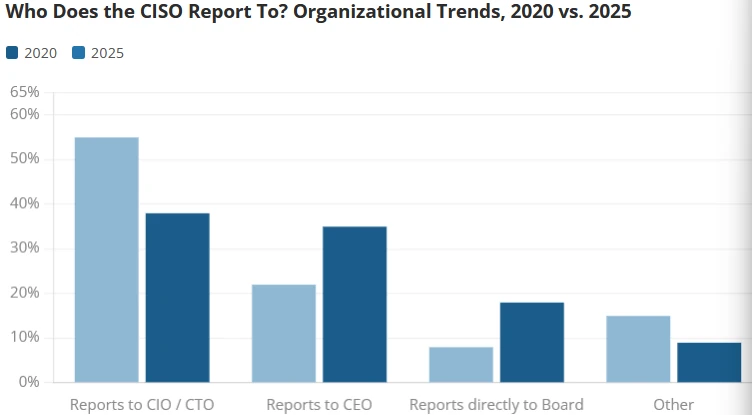
It is also worth noting that the organizations experiencing the most progress on security as a business enabler tend to be those where the CISO has built genuine relationships with the CFO, Chief Revenue Officer, and General Counsel, not merely the CIO. These partnerships allow security considerations to be surfaced during M&A due diligence, pricing discussions, contract negotiations, and product strategy conversations which are precisely the moments where security posture has the most direct impact on business outcomes.
What this means for organizations searching for CISO talent
The practical implication of everything described above is that the profile of the ideal CISO candidate has changed materially. Technical depth remains necessary, but it is no longer solely sufficient. The organizations that are finding the most success are those that realize it’s essential to be deliberate about defining what kind of CISO they actually need, rather than defaulting to the most technically credentialed candidate available.
Business fluency is essential
The ability to translate risk into financial terms, to speak credibly with a CFO about expected value at risk, and to connect security investment to revenue outcomes is now a baseline requirement for senior security leadership. Candidates who cannot make this translation convincingly will struggle to gain the organizational influence their role requires.
Communication skills matter as much as technical knowledge
The modern CISO is frequently presenting to boards, briefing enterprise customers, and participating in external facing conversations about the organization’s security posture. The ability to communicate complex risk concepts in plain language is a skill that deserves significant weight in any evaluation process.
Experience with AI governance is increasingly essential
Given the speed at which organizations are deploying AI tools, candidates with demonstrated experience developing and implementing AI governance frameworks are exceptionally valuable in 2026.
Cross-functional relationship building is a leading indicator of success
Ask candidates in the interview process to describe how they have worked with sales, product, legal, or finance teams in previous roles. The quality and specificity of those answers will tell you a great deal about whether they have genuinely operated as a business partner or remained within the comfortable confines of the security function.
Regulatory fluency is no longer optional in most sectors
A CISO who cannot navigate the current regulatory landscape, including SEC disclosure requirements, DORA in Europe, emerging AI regulation, and sector-specific frameworks, is operating at a significant disadvantage from the moment they start.
Thoughtful decisions and organizational alignment will determine security effectiveness
It is undoubtedly somewhat difficult for some organizations to fully embrace the model of the CISO as a strategic business partner. In certain environments, particularly those that have never experienced a significant security incident, it can be challenging to make the case for investment in an outcome that, when security is working well, is essentially invisible.
What the data now makes possible, however, is a much more rigorous and credible articulation of the value the security function creates. There is clear evidence that organizations with security leaders who are integrated into strategic decision making respond to incidents faster, contain damage more effectively, and recover more completely than those that do not.
As more of this evidence accumulates, organizations will increasingly find that the question is not whether they can afford a CISO who operates as a genuine business growth partner. Rather, it’s whether they can afford one who does not. The boards and executive teams that make well-considered, structurally sound decisions about how to position their security leadership, and who are willing to provide that those in these positions with the access and resources required to succeed, will be the ones that are genuinely prepared to address the current threat landscape.