
A New Form of SDR: How Automation Is Reshaping Entry-Level Sales Roles
A New Form of SDR: How Automation Is Reshaping Entry-Level Sales Roles
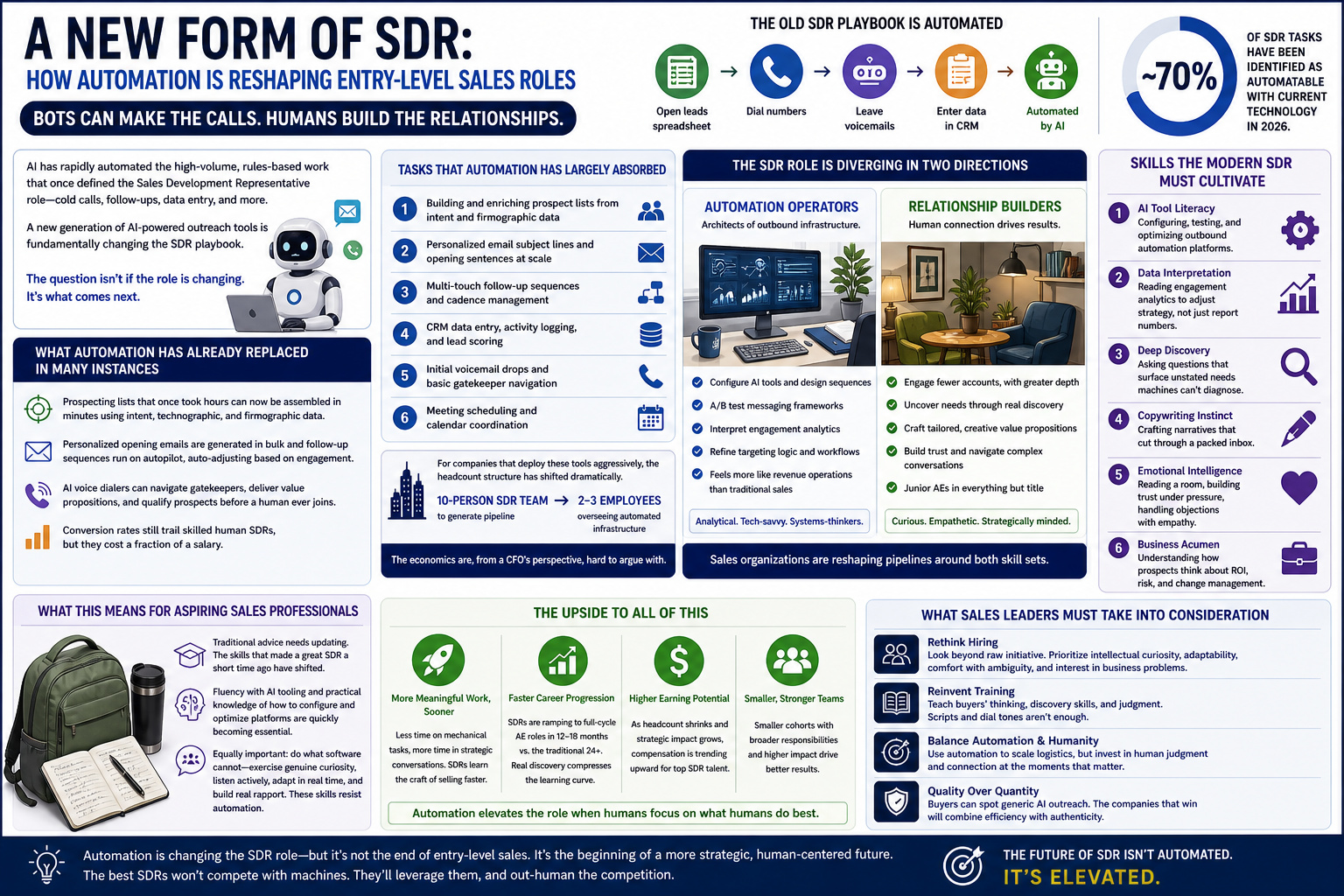
Software bots now can often handle cold calls, follow-ups, data entry. What’s does this mean for humans seeking an entry-level position in the sales field?
Until very recently, a Sales Development Representative’s day followed a general format that entailed opening a spreadsheet of leads, dialing numbers, dropping voicemails, and filling out the forms in the CRM being used. Today, that process is being automated in seemingly rapid fashion based on recent studies and the number of calls I receive that are becoming harder to tag as AI. Indeed, almost 70% of SDR tasks have been identified as automatable given the current applicable technology in 2026.
A new generation of machine powered outreach tools ranging from large language model email sequencers to voice AI dialers that can hold a rudimentary conversation/qualify a prospect before a human ever picks up the phone is significantly altering the SDR playbook. Sales leaders, hiring managers, and potential hires now must address the very nebulous question of what is next.
What automation has already replaced in many instances
The tasks most vulnerable to automation tend to be high volume, fairly easily assessed, and rules defined. Prospecting lists that once took an SDR hours to build can now be assembled in minutes by AI tools that scrape intent data, technographic signals, and firmographic pathways simultaneously. Personalized opening emails are generated in bulk while follow up sequences run on autopilot and are automatically adjusted based on open rates and reply perception.
Dialers have grown increasingly sophisticated, and several platforms now deploy AI voices capable of navigating gatekeepers, delivering a relatively sound value proposition, and directing interested prospects to a live human representative. The conversion rates on these systems still trail a skilled human SDR, but they cost a fraction of a salary.
Tasks that automation has largely absorbed
Building and enriching prospect lists from intent and firmographic data
Personalized email subject lines and opening sentences at scale
Multi touch follow up sequences and cadence management
CRM data entry, activity logging, and lead scoring
Initial voicemail drops and basic gatekeeper navigation
Meeting scheduling and calendar coordination
For companies that have deployed these tools aggressively, the headcount structure has shifted dramatically. A growth stage startup might once have hired a ten person SDR team to generate the requisite pipeline. Now some are running equivalent outreach volume with two or three employees overseeing a largely automated infrastructure. The economics are, from a CFO’s perspective, hard to argue with.
The SDR role isn’t quite on the way out, however the shape of the role is diverging in two directions with very disparate responsibilities.
Automation operators
One emerging type is less pure sales and more systems administrator. These SDRs have largely become architects of outbound infrastructure where they configure AI tools, design sequences, A/B test messaging frameworks, interpret engagement analytics, and refine targeting logic. The job requires a good deal of analytical thinking and comfort with sales technology stacks leading it to appear far more like a revenue operations position rather than the phone heavy function that has been in place for decades.
Relationship builders
This approach addresses what machines still do poorly including genuine human connection, nuanced discovery, creative problem reframing, and the development of trust. These SDRs are less focused on volume and more on depth as they tend to engage with fewer accounts but utilize greater research, more tailored value propositions, and actual conversations rather than scripted pitches. They are essentially junior account executives in everything but title.
The contrast between these two directions is reshaping how sales organizations structure their pipelines and how candidates may want to think about building their careers.
What this mean for aspiring sales professionals
For those early in their careers and considering sales as a path, traditional advice needs updating. The skills that made a great SDR a short time ago have certainly shifted.
Fluency with AI tooling and practical working knowledge of how to configure and optimize platforms will be nearly essential. Indeed, employers increasingly are listing these competencies on SDR job postings alongside communication skills.
Equally important is the ability to do what the software cannot – exercise genuine curiosity about a prospect’s business, actively listen, adapt messaging in real time based on subtle social cues, and build rapport. These tend to resist automation…
Skills that the modern SDR must cultivate
AI tool literacy
Configuring, testing, and optimizing outbound automation platforms
Data interpretation
Reading engagement analytics to adjust strategy, not just report numbers
Deep discovery
Asking questions that surface unstated needs machines can’t diagnose
Copywriting instinct
Crafting narratives that cut through a packed inbox
Emotional intelligence
Reading a room, building trust under pressure, handling objections with empathy
Business acumen
Understanding how prospects think about ROI, risk, and change management
The upside to all of this
There is certainly an argument that automation is actually elevating the SDR career trajectory rather than curtailing it. When machines absorb the mechanical labor, the humans who remain are doing more interesting work sooner in the process. An SDR who spends their days in strategic conversation rather than leaving voicemails is learning the craft of selling far faster than their predecessors did.
Sales leaders who have restructured their teams around this model report something rather unexpected Their SDRs are ramping to full cycle account executive roles in 12 to 18 months as opposed to the traditional 24+. Days filled with real discovery conversations (even if automation filtered the funnel to surface them) appear to compress the learning curve dramatically.
There is also the matter of earnings. As SDR headcount shrinks and the remaining roles carry more strategic weight, compensation is trending upward. The low paid, high turnover SDR pool is giving way to a smaller, better compensated cohort with meaningfully broader responsibilities.
What sales leaders must take into consideration
For those managing sales groups, this shift demands a rethinking of how SDRs are recruited, onboarded, and developed. Hiring for raw initiative made sense when the job was fundamentally about volume. Today, the profile looks different as intellectual curiosity, adaptability, comfort with ambiguity, and genuine interest in business problems matter as much as competitive drive.
Training programs also will require reinvention. Teaching someone to run a dialing cadence is far less valuable than prompting them to think like a buyer, cover a discovery call, and develop the judgment to know when to deviate from the script.
Perhaps most critically, leaders need to resist the temptation to automate everything and call it efficiency. Buyers have noticed the degradation in outreach quality as inboxes are flooded with AI generated emails so generic they’ve lost any value. The companies that will win the next era of outbound sales are those that use automation to scale the logistics while preserving and investing in genuine human judgment and connection at every touchpoint that matters.